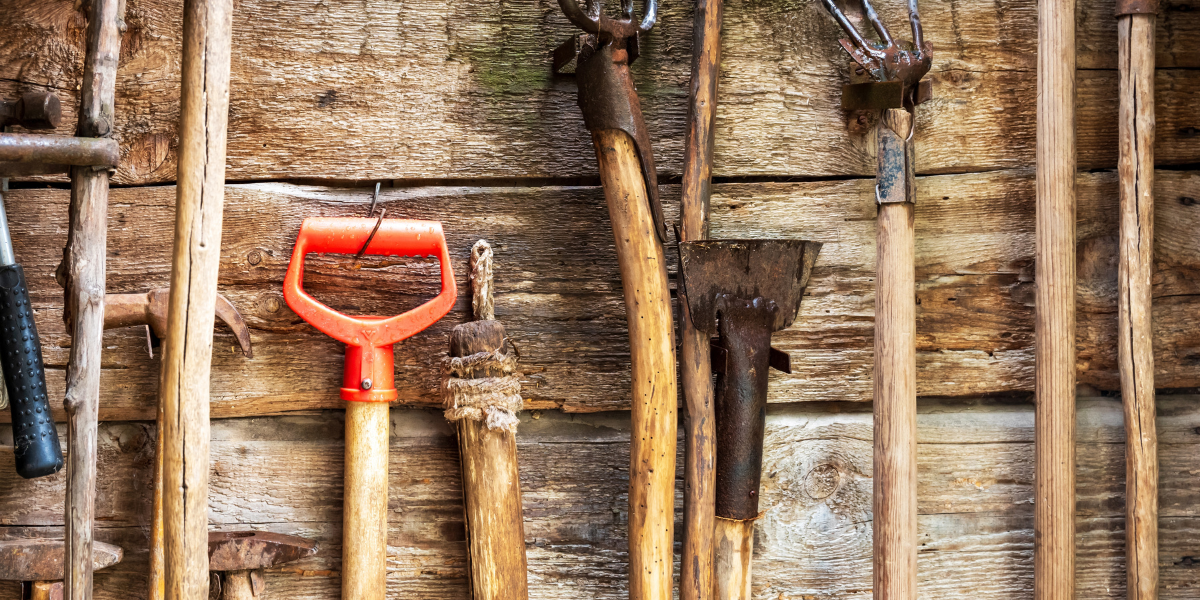

The range of gardening tools available can feel overwhelming when you're starting out. Cultivators, aerators, dibbers of seventeen different sizes, specialist bulb planters, it can make the whole thing feel more complicated than it needs to be.
Here's the truth: for your first season, five tools are all you need. Buy good versions of these five, look after them, and you'll be set for years.
1. A spade
The single most useful tool in any garden. A spade digs, lifts, splits perennials, edges beds, mixes compost into soil. For beginners, a border spade, slightly smaller than a full spade, is often easier to handle and just as capable for most jobs.
Spend a little more here and get something with a stainless or forged head. Cheap spades buckle under proper digging pressure. You can find good-quality spades and forks at Lawsons Group, where the staff know the difference between brands and won't just point you at the most expensive option.
2. A fork
Used alongside the spade for breaking up clods, loosening roots, turning compost, and working through heavy soil without cutting into root vegetables the way a spade can. You can dig a whole bed with just a spade, but a fork makes it significantly easier and does less damage to anything already growing in the soil.
3. A hand trowel
Your most-used small tool. Planting seedlings, making holes for bulbs, scooping compost into pots, the trowel is in your hand every time you're in the garden. Buy one with a comfortable, ergonomic handle. You'll thank yourself after an hour's planting.
A stainless blade wipes clean easily and doesn't rust. If you can get a matching hand fork and trowel set, they usually share a handle design and work well together.
4. A hoe
The tool that saves you the most effort over a whole season, if you use it properly. A Dutch or swan-neck hoe, used regularly in dry weather to skim just below the soil surface, kills annual weeds before they establish. Run it through your beds once a week in growing season and you'll barely have a weeding problem.
The trick is to hoe shallowly, just below the surface, and to do it when the soil is dry so the severed weeds die rather than re-rooting. Most beginners hoe too deeply and too infrequently.
5. A watering can
For new seedlings and container plants especially, a watering can with a fine rose head is essential. The rose diffuses the water into a gentle shower that won't flatten delicate seedlings or wash compost out of pots. A 9-litre can is the practical sweet spot, large enough to cover reasonable ground, light enough to carry comfortably when half full.
What you don't need yet
Resist the rotavator, the powered aerator, the seventeen-function cultivator. Resist the pruning kit unless you have fruit trees or established hedges. Resist any tool described as "specialist" or "professional" on your first visit to the shop.
These five basics will see you through your first season easily. Add to the toolkit as you discover what your specific plot actually needs, which, for everyone, turns out to be different. That discovery is part of the pleasure.