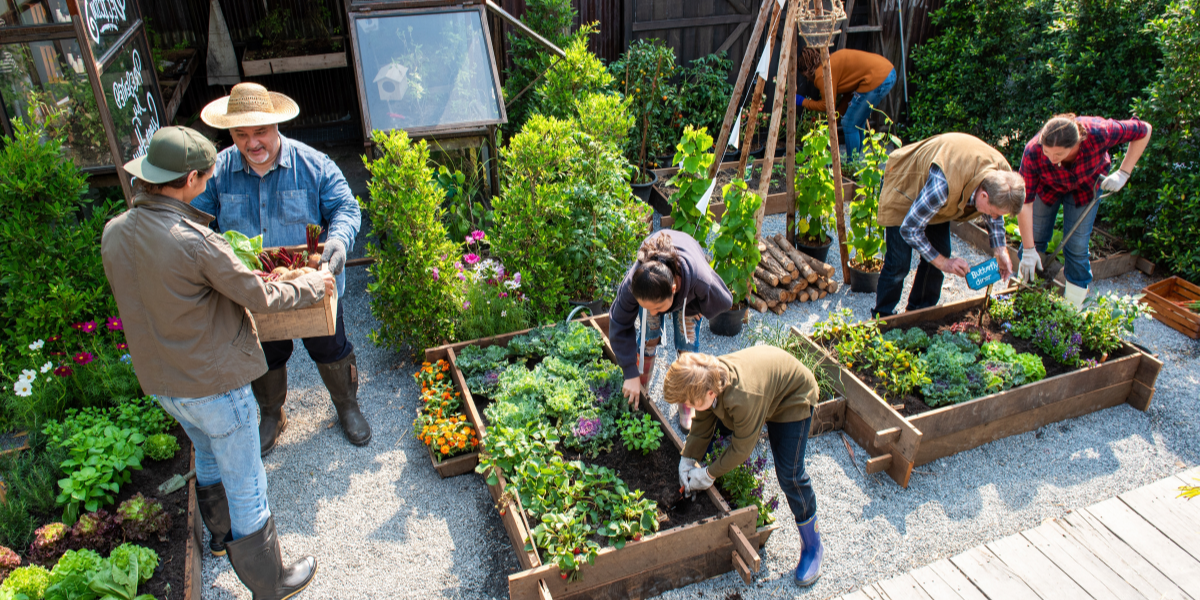

There's a particular kind of loneliness that can come with solo gardening. You're outside, you're doing something you love, and yet there's no one to tell when the first runner bean appears, no one who truly understands the grief of losing a crop to slugs overnight. Gardening is wonderful alone, but it's better with others.
The good news is that gardening communities are everywhere. You just have to know where to look.
Start with what's local
The most natural place to find gardening companions is in your own neighbourhood. Allotment sites are the obvious first port of call, even if you don't have a plot yet, many sites hold open days where visitors are warmly welcomed. The conversation that starts over a fence about blight-resistant potato varieties can easily become a friendship.
Local horticultural societies, most towns still have them, hold monthly meetings, often with visiting speakers, seed swaps, and plant sales. They're generally welcoming to newcomers and brilliant for meeting people who've been growing in your specific area for decades. That local knowledge (what drains badly after the January rains, where the slugs are worst, which spring is reliably late) is invaluable and genuinely can't be found online.
Community gardens are another option, shared plots where people grow together, often with a focus on involving people who don't have their own outdoor space. They're often run by charities and are some of the most welcoming, varied communities you'll find.
Garden shows and plant fairs
You don't have to aim for Chelsea. County shows, local plant fairs, NGS open garden days, and specialist plant society shows all draw passionate growers and are natural meeting grounds. Go once with the aim of talking to people rather than just buying, and you'll be surprised how naturally conversation starts around shared enthusiasms.
Finding your people online
Online gardening communities have grown enormously in recent years. Forums, Facebook groups, and Reddit communities cover everything from general allotment growing to highly specialised interests like alpine plants or heritage tomato varieties. They're useful for advice, but they can also be genuinely warm places to belong, especially if you find a community that matches your growing style and values.
That was part of what prompted me to build Garden Living. I wanted somewhere that felt like a real community rather than just a place to ask questions, somewhere you could actually meet and get to know other gardeners as people, not just usernames. The platform is built around genuine connection, and the conversations I see between members remind me of the best bits of allotment culture: generous, unhurried, full of the kind of detail only a fellow grower would care about.
Seeds for community: give before you ask
Wherever you look for your gardening tribe, the approach is the same. Bring something to share, seeds you've saved, a cutting, a surplus of seedlings, your experience from a problem you've solved. Community forms around generosity. The gardener who arrives with a bag of courgette seedlings and gives them away freely will have more friends by lunchtime than the one who only asks questions.
Community in the garden, as in life, begins with showing up and offering something. The rest tends to take care of itself.