
My great-grandfather started Lawsons Group in 1921, a timber, building materials and landscaping merchant that has been in the family ever since. I'm the fourth generation to be involved in the business. Growing up in a family like that, you absorb certain things: the value of long-term relationships, the importance of trust, the satisfaction of work that lasts.
So when I eventually found myself working in the family business as Chairman, it felt natural that the part I loved most was the landscaping and gardening side, the plants, the growing advice, the customers who came in not just for materials but for a conversation about what to do with a difficult north-facing bed or a heavy clay soil.
What I noticed
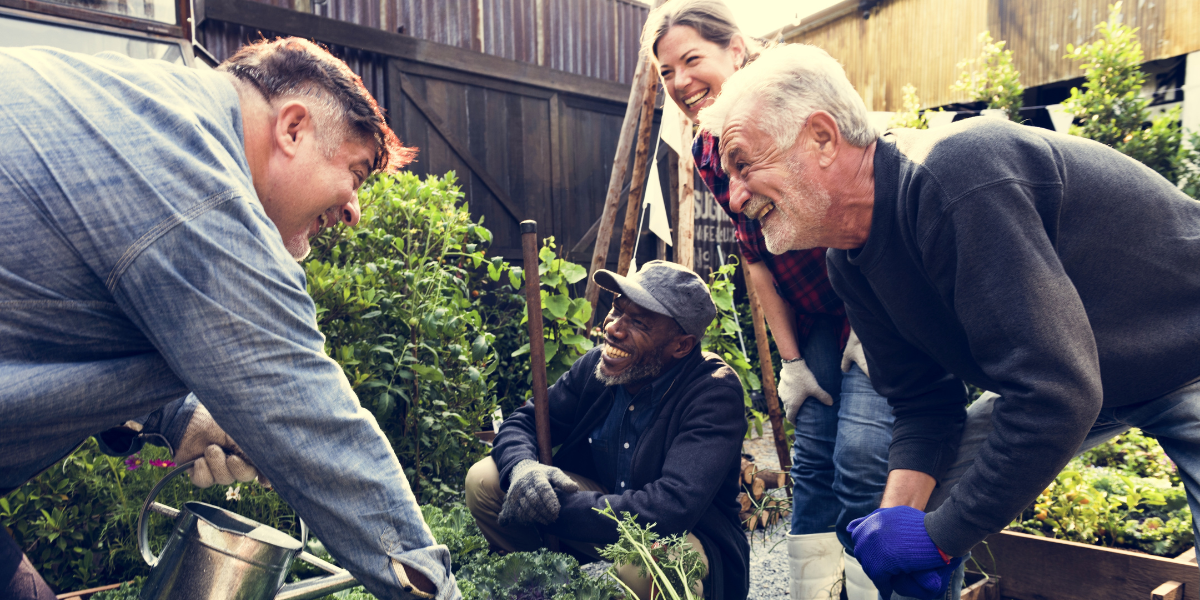
Over many years of talking to gardeners at Lawsons, I noticed something. The customers who seemed most alive, most engaged, most energetic, were the ones who had a community around their gardening. They had an allotment neighbour they argued happily with about the best way to stake tomatoes. They had a friend who passed them cuttings. They went to shows, swapped seeds, shared tips and harvests.
And the customers who seemed to find gardening slightly lonely, not unhappy, but lacking something, were often the ones who gardened entirely alone. They had the knowledge and the space and the enthusiasm, but they didn't have the people.
I started thinking: why don't these people have a way to find each other?
The gap I kept seeing
There are plenty of general social platforms, and there are plenty of gardening advice forums. But there wasn't anything that felt like a place for gardeners to genuinely meet, to discover each other as people, to see who was growing near them, to find someone they might actually want to have a conversation with over a fence.
The allotment culture I grew up around had this naturally. You turned up, you got a plot, you met your neighbours, and the community built itself around the shared activity. But not everyone has an allotment. Not everyone lives near a community garden. And even for those who do, the people you happen to be placed next to aren't necessarily the people you'd have chosen.
I thought: there must be a better way to help gardeners find each other.
Why this particular kind of community
I want to be honest about what Garden Living is. It's a community, first and foremost. It's a place for people who love growing things to find and get to know each other. Some of those connections will be purely about gardening. Some will go beyond that, into friendship, into shared visits, into relationships of all kinds.
I didn't want to build something that was only about dating, because gardeners are about so much more than that. The community itself, the exchange of knowledge and plants and stories and company, is the heart of it. What grows from there, naturally and in its own time, is up to the people involved.
That's the way I've always thought about things at Lawsons, too. We're not there to push anything on a customer. We're there to give them the best possible conditions and materials, and then trust that they'll grow something wonderful.
What I hope for it
I hope Garden Living becomes a place where someone who's spent years gardening alone discovers that there's a whole community of people out there who care about the same things they do. I hope it's where someone who's just moved to a new town finds a plant fair to go to and a person to go with. I hope it's where friendships begin that last for decades.
Mostly, I hope it feels like an allotment gate, a place where you can lean on the fence, say "what are you growing?", and always find someone who's genuinely pleased to tell you.
That's all I ever wanted to build.