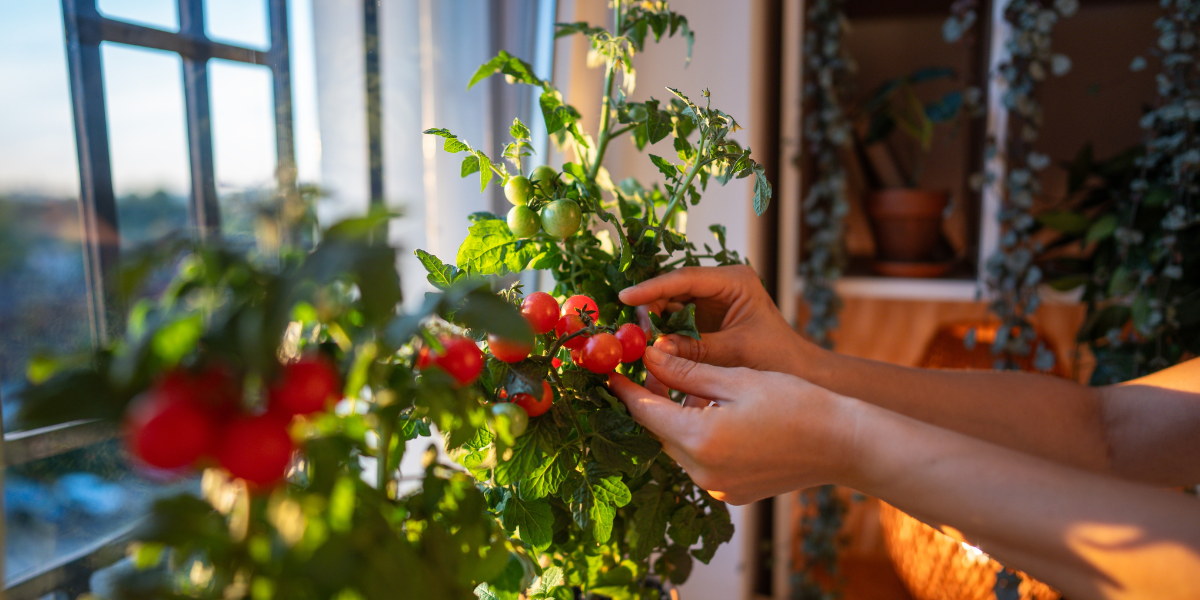

Ask any experienced gardener what vegetable they'd grow if they could only grow one, and the answer, more often than not, is tomatoes. There's something deeply satisfying about picking a warm tomato straight from the plant on a sunny afternoon. Nothing from a supermarket comes close.
Tomatoes have a reputation for being fussy, and they do have requirements. But meet those requirements and they produce generously all summer. Here's what you actually need to know.
Choosing the right variety
There are hundreds of tomato varieties, split roughly into two types: cordon (or indeterminate) varieties that grow tall and need pinching out, and bush (or determinate) varieties that stay compact and look after themselves more.
For beginners, I'd suggest starting with one of each so you can see the difference. Good beginner cordon varieties include Gardener's Delight (small, sweet, prolific) and Alicante (a reliable mid-size). For a compact bush variety, Tumbling Tom is great for pots and hanging baskets.
Resist the urge to grow fifteen different varieties in your first year. Grow two or three, and grow them well.
Sowing and raising plants
In the UK, sow tomato seeds indoors from mid-February to late March. Any earlier and the plants will be leggy and struggling before it's warm enough to go outside. Sow into small pots or seed trays of good quality compost, barely cover with a fine layer of vermiculite, water gently, and keep on a sunny windowsill or in a propagator at around 20°C.
Once seedlings are large enough to handle, pot them on individually. When they reach 20–30cm, pinch off the very bottom leaves and bury the stem deeper when potting on, tomatoes form roots along buried stems, which makes for a stronger plant.
Outside, in a greenhouse, or on a windowsill?
In most of the UK, tomatoes grown in a greenhouse or polytunnel will significantly outperform those grown outside. The extra warmth and protection from late blight, a fungal disease that devastates outdoor crops in wet summers, makes a real difference. That said, outdoor tomatoes absolutely work in a sheltered, sunny spot, especially in the south.
For those without a greenhouse, a sunny south-facing wall is your friend. Grow bags or large containers work well. Keep plants staked and sheltered from wind.
The key things tomatoes need
- Consistent watering. Irregular watering is the cause of most tomato problems, including blossom end rot and fruit splitting. Water regularly and deeply rather than a little every day.
- Regular feeding. Once the first flowers appear, feed with a high-potash liquid fertiliser once a week. Tomato feed from any garden centre is fine.
- Removing side shoots on cordon varieties. The small shoots that appear in the junction between the main stem and a leaf, the axil, should be pinched out when they're small. This focuses the plant's energy into the fruit rather than excessive leaf growth.
- Support. Tall varieties need staking. A garden cane and soft ties, replenished as the plant grows, is all that's needed.
Harvesting and storing
Pick tomatoes as soon as they're ripe, leaving them on the plant in wet weather invites disease. Towards the end of the season, any green tomatoes still on the vine can be brought inside and placed in a paper bag with a ripe banana to encourage them to ripen off the plant.
The first bite of your first homegrown tomato is something you don't forget. They taste different from anything you can buy, warmer, more complex, more alive somehow. Once you've grown one successful crop, you'll always grow them.